
There was a phase when I assumed monochrome dressing was only for fashion editors or people with perfectly curated closets. It looked sleek online but unrealistic in everyday life. Then I started noticing how often the most put-together people around me were actually wearing one color head to toe at coffee shops, in offices, even during quick grocery runs. It wasn’t dramatic styling. It was just intentional color repetition.
What makes monochrome outfit styling ideas so practical for daily wear is how quietly powerful they are. You don’t need more clothes. You don’t need bold trends. You just build outfits within one color family and let tone, texture, and proportion do the work. Once you understand that rhythm, getting dressed becomes faster, easier, and noticeably more polished.
Why Monochrome Outfits Work So Well In Everyday Dressing

Wearing one color family streamlines the visual line of the body. That’s why monochrome outfits often feel taller, leaner, and calmer to the eye. There’s no harsh break between pieces, so the outfit reads as cohesive rather than assembled.
There’s also a practical reason this styling approach works for real life in the US. Most daily wardrobes already revolve around neutrals, denim, blues, blacks, greys, beiges, and navies. Monochrome styling simply uses what’s already there, just more intentionally. Instead of contrasting pieces, you stay within the same tonal range.
Another advantage is repetition. Monochrome outfits make re-wearing clothes look deliberate rather than repetitive. The same sweater feels different when paired with trousers in the same color instead of contrasting denim. That flexibility is what makes monochrome outfit styling ideas sustainable for everyday wardrobes.
Casual Monochrome Outfit Styling Ideas That Feel Effortless

For daily life errands, casual meetings, and coffee runs, comfort and simplicity matter. The key is choosing relaxed silhouettes while staying within one color family.
The classic athleisure set is one of the easiest entries into monochrome styling. Matching hoodies and joggers in soft grey, beige, or muted pastels looks intentional without effort. This works especially well in suburban or city US settings where casualwear dominates daily dressing.
Denim-on-denim is another practical monochrome outfit that has become widely accepted again. Pairing blue jeans with a similar-tone denim shirt or jacket creates cohesion. Adding another blue layer, like a slightly deeper chambray or indigo jacket, keeps the outfit tonal rather than contrasting.
All-grey outfits, often called the groutfit, are surprisingly wearable. Light-grey trousers with a darker grey sweater and white sneakers feel relaxed but composed. The tonal shift between greys prevents flatness while keeping the palette unified.
Co-ord knit sets also simplify monochrome dressing. Matching knit tops and skirts or pants removes decision fatigue. These sets have become common in US everyday fashion because they bridge comfort and polish without styling complexity.
Polished Monochrome Outfit Styling Ideas For Work
Monochrome styling becomes even more powerful in professional environments because it naturally communicates structure and confidence. Tailoring and tonal variation do most of the visual work.
Navy monochrome is a softer alternative to black workwear. A navy blazer layered over a lighter blue shirt with slim navy trousers creates depth without contrast. This combination feels authoritative but approachable in modern office settings.
Neutral monochrome outfits, camel, beige, or warm browns work especially well in fall and winter work wardrobes across the US. A camel coat over tonal trousers and a knit sweater creates warmth visually and physically. The similar tones read refined rather than busy.
Grey tonal tailoring is another reliable option. A charcoal suit paired with a lighter grey knit or turtleneck builds dimension within the same color family. This keeps the outfit professional while avoiding the rigidity of full black.
How To Make Monochrome Outfits Look Interesting, Not Flat

The biggest concern people have with monochrome outfit styling ideas is boredom. When everything is one color, the outfit can feel flat. The difference between dull and sophisticated monochrome is texture, tone, and proportion.
- Mix textures within the same color (knit, denim, leather, cotton)
- Use multiple shades from light to dark
- Balance oversized and fitted silhouettes
- Add neutral or metallic accessories sparingly
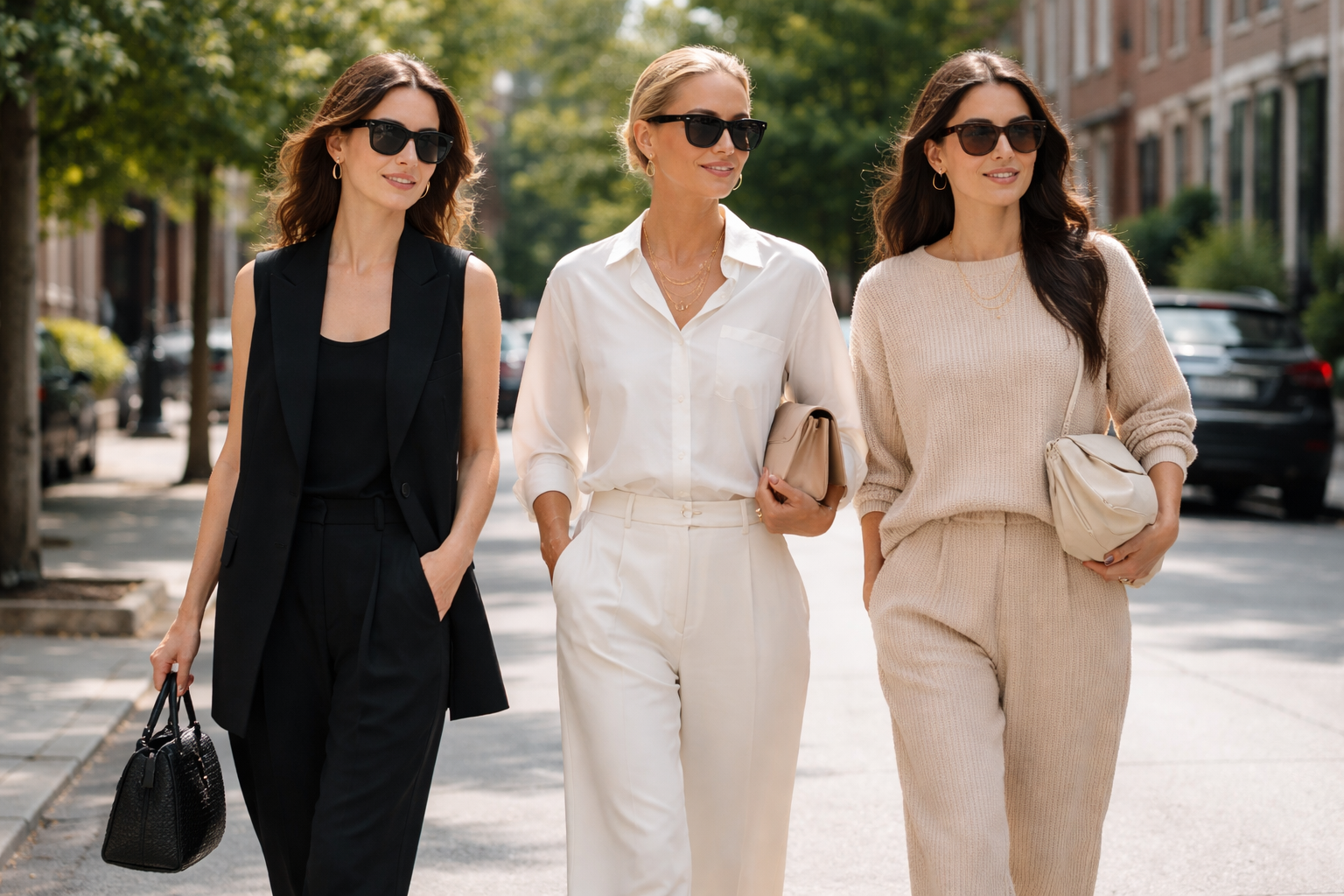
Texture is especially important in neutral monochrome outfits. For example, pairing a chunky knit sweater with smooth trousers in the same beige tone creates contrast without adding another color. The eye reads variation through fabric instead of hue.
Shade variation also creates depth. A single-color outfit becomes visually layered when you move from lighter tones near the face to darker tones lower in the outfit. This tonal gradient is why monochrome outfits often look styled even when simple.
Everyday Monochrome Outfit Ideas Using Common US Wardrobe Staples

Most monochrome outfits don’t require new pieces. They come from combining familiar staples more intentionally.
An all-black casual outfit remains one of the most reliable monochrome options. Black jeans with a black sweater and black sneakers feel cohesive and easy. Adding a slightly different black texture, like leather or denim, prevents uniformity.
Neutral beige outfits are common in everyday US fashion because they align with capsule wardrobe basics. Beige trousers, a tonal knit, and matching sneakers create a relaxed but elevated daytime look that works across seasons.
All-blue outfits built around denim are another accessible approach. Blue jeans with a tonal chambray or navy top maintain cohesion while still feeling casual. This works particularly well in informal workplaces or weekend settings.
All-white or cream monochrome outfits also appear frequently in warmer regions or seasons. Off-white jeans paired with a cream knit or tee create a clean, minimal silhouette that feels intentional without effort.
Accessories That Complement Monochrome Outfits

Accessories in monochrome styling should support the palette rather than compete with it. The easiest approach is using achromatic accessories, white, black, or metallic.
White sneakers often ground darker monochrome outfits like grey or navy without breaking cohesion. Black accessories anchor lighter monochrome outfits like beige or cream. Metallic pieces, gold or silver, add subtle contrast without introducing color.
Bags and belts in similar tonal ranges maintain the monochrome line. For example, a tan bag with a camel outfit or a charcoal bag with grey tailoring keeps visual continuity intact. This consistency is what preserves the streamlined effect monochrome dressing creates.
Why Monochrome Dressing Simplifies Daily Wardrobes

One of the most practical benefits of monochrome outfit styling ideas is reduced decision fatigue. When outfits are built around color families, combinations become predictable and faster. Pieces within the same palette naturally coordinate.
This approach also extends wardrobe longevity. Clothing gets worn more often because tonal pairing creates new outfit variations without new purchases. That repetition looks intentional instead of repetitive.
Monochrome styling also adapts easily across seasons. The same color family can shift through fabric weight, from light cotton in summer, wool, or knit in winter, while maintaining visual consistency. This flexibility makes monochrome dressing one of the most sustainable everyday styling strategies.
Frequently Asked Questions (FAQ’s)
1. What Colors Work Best For Monochrome Outfits?
Neutral colors like black, grey, navy, beige, and white are easiest for monochrome outfits because wardrobes already contain multiple pieces in these shades. They also layer naturally across seasons.
2. Are Monochrome Outfits Suitable For Casual Settings?
Yes. Casual monochrome outfits like matching athleisure sets, denim-on-denim, or all-neutral basics are widely worn in everyday US settings. The styling feels relaxed but intentional.
3. How Do You Prevent Monochrome Outfits From Looking Boring?
Use multiple shades of the same color and mix textures like knit, denim, leather, or cotton. Proportion contrast oversized with fitted also adds visual interest.
4. Can Monochrome Outfits Work For All Body Types?
Yes. Monochrome styling creates an uninterrupted vertical line, which often makes the body appear taller and more balanced. Adjusting fit and proportion ensures it works across body shapes.
Final Thoughts
Monochrome outfit styling ideas work because they align with how real wardrobes actually function. Most people already dress within a narrow color range, denim blues, blacks, neutrals, without realizing it. Monochrome dressing simply makes that pattern intentional. Once you start seeing outfits in color families instead of separate pieces, getting dressed becomes more fluid. The same clothes feel newer because tone and texture shift the overall look.
Over time, monochrome styling stops feeling like a technique and becomes instinct. It’s less about fashion and more about clarity in dressing.